- Categories
- People Making a Difference (136)
- Philanthropy (67)
- Photography (75)
- Podcast (18)
- Social Media (27)
- Travel (127)
- Video (96)
- Women (15)
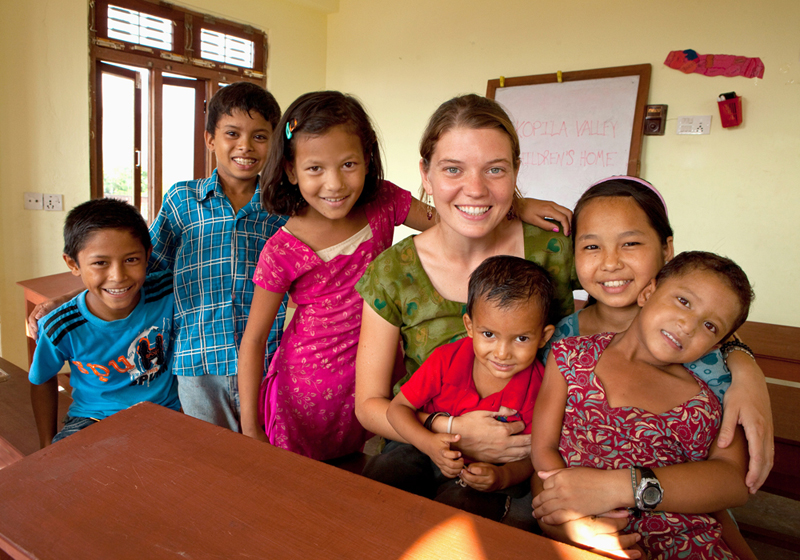
Maggie Doyne with her children at Kopila Valley Childrens Home, Nepal
The other night, Maggie Doyne of Blink Now, became the CNN 2015 Hero of the Year.Maggie is a 29 year-old American woman, who has 50 kids and lives in Nepal!
Maggie’s story and the path she decided to take early on in life, has touched the hearts of people around the globe and changed the lives of hundreds of Nepalese women and children.
Maggie was a high school classmate of my daughter, Erin. After graduation, Maggie decided to take a gap year and travel before heading off to college. Eventually, she ended up in Nepal and saw a country devastated by 10 years of civil war and thousands of orphaned children left in its wake. She used her babysitting savings to buy property and build a home for herself and orphaned children – she was 19 years old. Maggie has 50 children now, has built a primary school for 250 kids and is currently building a high school.
When Maggie accepted the Hero of the Year award the other night, she said; “ And to all of you in this room and who are watching, please, please remember that we have the power to create the world that we want to live in”. She’s done just that and has inspired countless others, to do the same. She inspired my daughter and I to seek out other individuals all over the world who were creating positive change and to make a filmabout them, with the hopes it would inspire others to make a difference.
Imagine if we all thought like Maggie and believed we all have the power to create the world that we want to live in. The fact is we do have that power. It starts with the little things we can do – in our own lives, in our family’s lives and in our communities. Small things have a way of growing into big things. When you educate one child, you change a life that has the potential to change other lives.
Maggie, you continue to inspire me. You are a bright light in a troubled world and a beacon of hope. Congratulations for this well deserved honor.
If you’d like to watch Opening Our Eyes, a film about Maggie and other change makers, you can view it here.
My daughter, Erin and I started this blog, when we first embarked on our journey around the world, creating a film about individuals making positive change. It was then, and continues to be a journey that the two of us share intimately – together as mother and daughter. 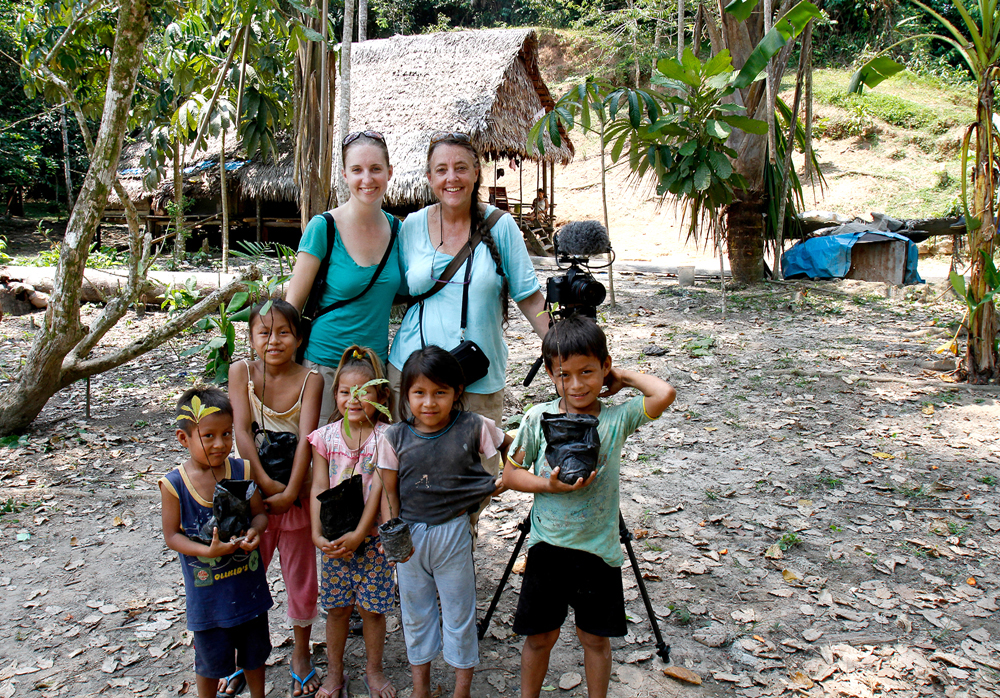 Our trip was filled with memorable experiences as we circled the globe. Our film has been a journey for our audiences, who were motivated to “do something”, inspired by individuals like Maggie Doyne who has changed the lives of thousands of children. We formed a very strong bond through this experience, and that has become be part of our legacy.
The great news is that Erin is getting married next month, to a wonderful young man named Bryan. My husband and I feel blessed and happy that Erin and Bryan have found one another to experience life together – the joys and sorrows and everything in between. And so another chapter begins in her life and ours.
As I look back, my most cherished memories are about Erin. It’s usually the little moments that resonate the most – like the time she greeted me at the airport after I had been away for a long period of time. She was probably about 5 or 6 years old, and she ran up to me, arms outstretched with exuberance and joy, laughing as she called out “Mommy!” after spotting me in the crowd. I’ll never forget that moment. It was pure love.
Love and relationships are what makes a life worth living. These days, it is easy to lose sight of the simplicity of that thought, because we are all distracted by other things in the consumer culture we live in. I am grateful that Erin and I took time in our lives when we did, to make time for one another. I know that both of us were incredibly humbled by our journey and witnessing what the power of “love” could do, on a global scale. We formed a bond and we will have that bond forever.
So I say to Erin, “Be happy on your wedding day and all the other days that you and Bryan get to spend together. Cherish each moment. It’s what life is made up of – every precious one.”
This photo 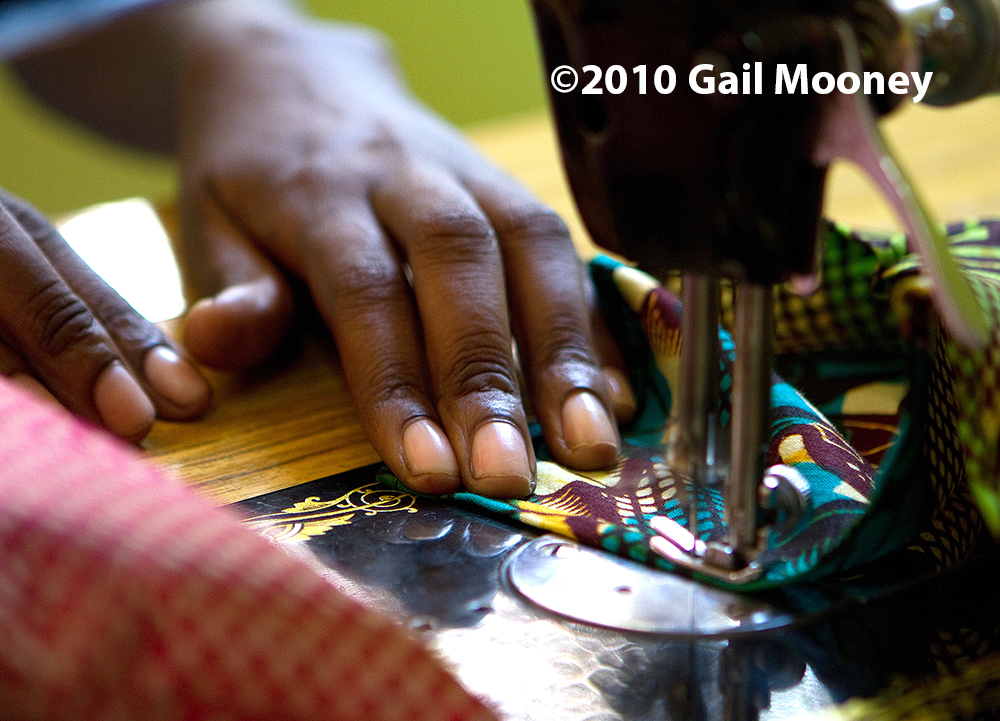 was taken when we were in Uganda, working on the segment in our film about Wrap Up Africa. This tailor is sewing to be able to pay for her child’s cancer treatments. Founder Letha Sandison established Wrap Up Africa to help aid cancer patients and their families in Uganda. She has also created jobs for artists who design and make buckles and buttons for these garments that reach markets all around the world. In essence she has created a foundation that can sustain itself.
The day had an ominous look to it, with a dark foreboding sky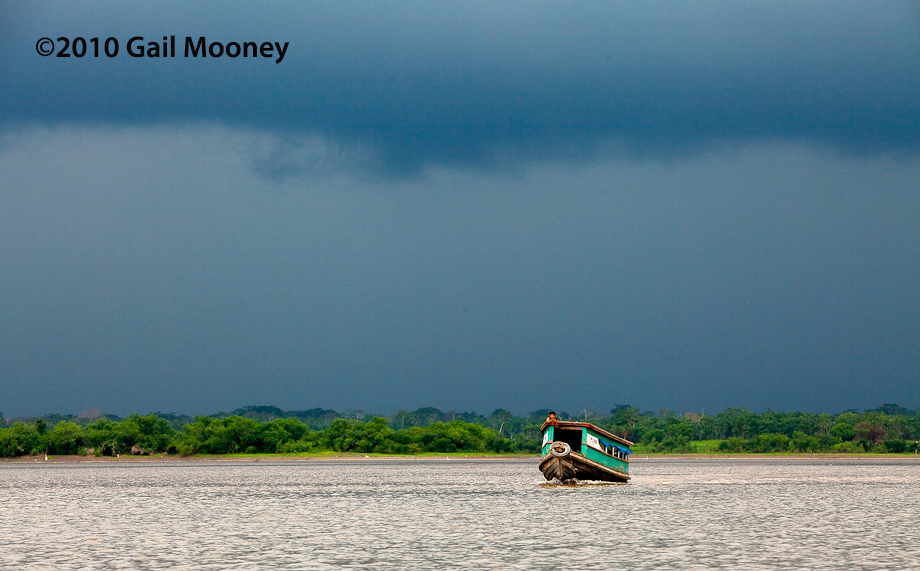 and choppy water on the great Amazon River. Erin and I were staying at the APECA base camp upriver from the town of Belen, one of the poorest towns along the river. We were planning to go there that day, by boat – everything is done by boat – there are no roads.
Pablo, Gina Low’s partner at APECA, assessed the situation and decided to go as planned, but he told us it was going to rain and to prepare for it. The trip to Belen took about an hour if my memory serves me well. It was open water with just a few villages along the way and aside from the sound of our motor and those of other boats off in the distance; there was an eerie silence.
When we got to Belen, the skies let loose. Pablo quickly navigated our boat to one of the shacks along the river. We took refuge in this machine shop and watched the storm play out. We were thankful for the cover over our heads and grateful to Pablo for knowing exactly what to do. I think that is what continually impressed me the most about the people in our film, like Pablo. They were all incredibly independent and resilient in difficult situations. They were people you could trust and that says a lot.
Some of our fondest memories from our journey were from our visit with Maggie Doyne and her children in Surkhet, Nepal. All the kids were such a joy to be around. 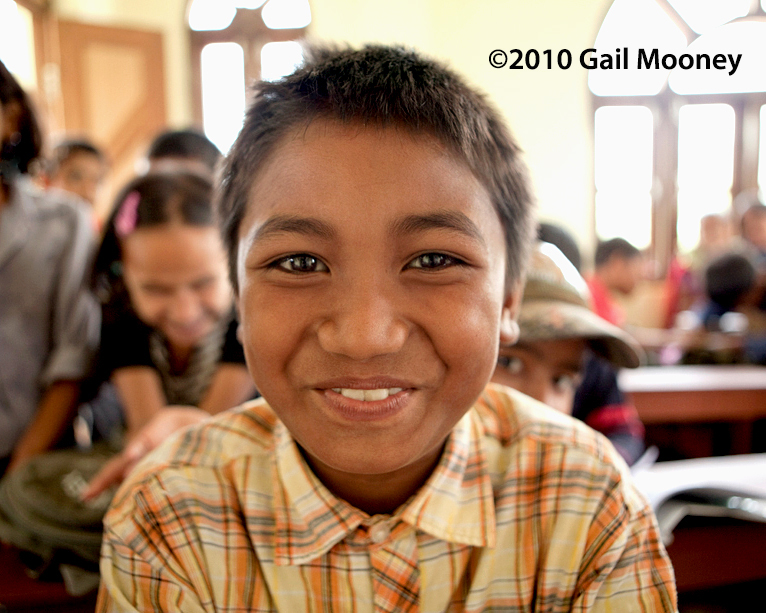 This young boy at the Kopila Valley Primary School glowed with enthusiasm.
When my daughter Erin, and I were planning our 99-day adventure around the world,  we built in some buffer time, between our scheduled times with our subjects. We needed flexibility, in the event things didn’t go perfectly according to plan, which had a high probability, considering the scope of our trip. Ultimately we had very few glitches and that buffer time gave us the opportunity to get more involved with the culture we were. It also gave us time to shoot still images.
We spent 5 days in Moscow. It was June and the days were long. One Saturday, everywhere we went, there were weddings. It was amazing because each bride and groom seemed to have his or her own style – everything from a pirate theme to pure “glam”.
Click here to see other still images from our journey.
This photograph was taken when my daughter Erin and I were filming in a
small hill tribe village in the northern mountains of Thailand. We were following Dr. David Mar Naw, as he trekked through the villages, a “one man band”, dispensing medical care and building latrines for Burmese refugees. Some of them had never seen a doctor before. This lady was waiting to have her tooth pulled.
It was painful to watch as the doctor pulled this woman’s tooth, without anything to ease her pain. She was stoic and barely winced. Perhaps she was thinking about the relief she would have, after the tooth was removed.
These people humbled me, in fact I was humbled by all the people we met, along our journey around the world. I will be forever grateful for that journey. It opened my eyes to so many things and I am a better person because of it.
This is just one story that makes up the film, Opening Our Eyes, a documentary about the “power of one” and “making a difference” in the the world.
Most folks don’t realize that when Erin and I went around the world in pursuit of people creating positive change – we weren’t just shooting a movie – we also shot over 5000 still images.
When we planned our itinerary, traveling and shooting on six continents in the summer of 2010, we built in some “free time” to see the sights. It also acted as a buffer in case things didn’t go according to plan. As it happened, everything did go according to plan and we had some wonderful down time in Moscow, Istanbul, Bangkok, Melbourne and Sydney, Australia and India. 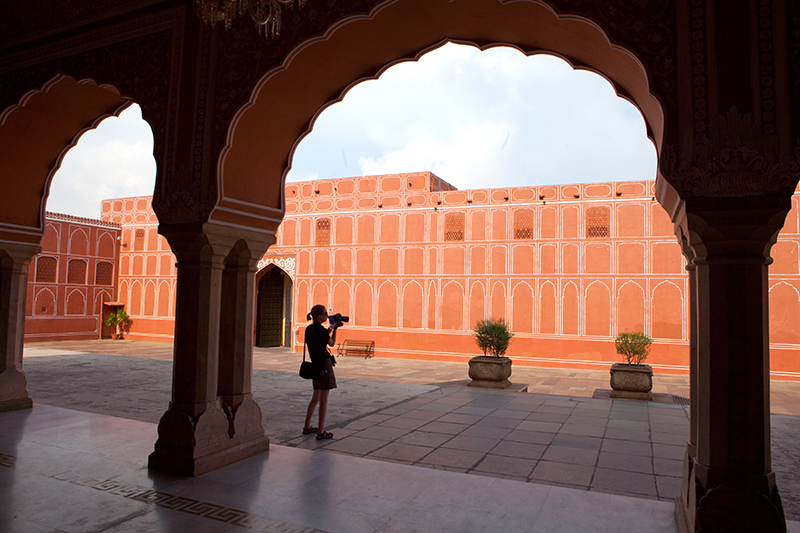 We shot still images in all of these destinations in addition to the stills that we shot on the movie set, and ended up with a nice archive.
I’ve been editing this archive over the last year and am going to make them available for prints. You can see the first gallery of images, and there will be more to follow over the next few months. A print would make a beautiful Christmas gift for someone special. If you order before Dec. 17th – the prints will arrive before Christmas.
Happy Holiday.
Tom and I will be headed out tomorrow morning at the crack of dawn. We’re bound for Chicago to spend Thanksgiving with our daughter Erin, her boyfriend Bryan and his family. For me, it’s also a welcome road trip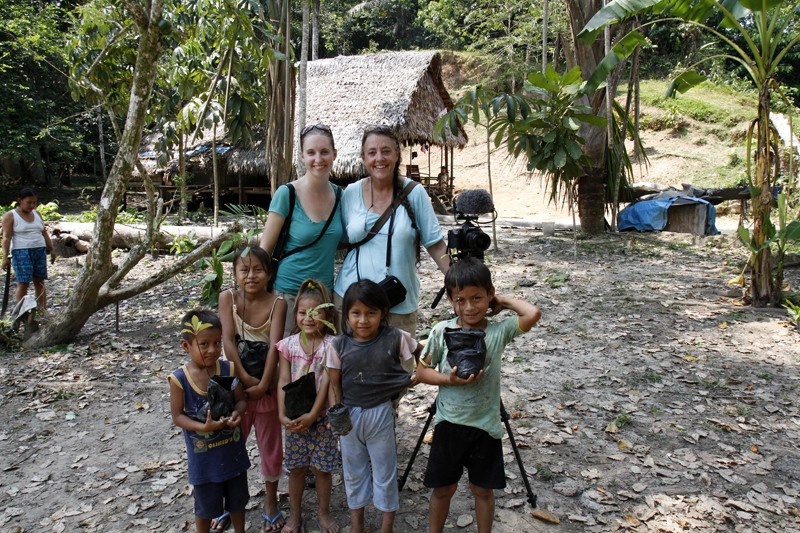 and a journey home to my birthplace. It’s funny how things have a way of coming full circle. I was born in Chicago and left to head “East” with my parents and family when I was a young child. But for someone like me, who has moved more than a dozen times in my lifetime – Chicago feels like home. It’s where my roots are.
I’ve been a bit of a “rolling stone” over the years, but I’m also extremely grateful that I have been able to share many of life’s incredible experiences and travels with Erin and my husband Tom. It’s been a gift, to be able to combine my passions with my career and family. This Thanksgiving I am mindful of my blessings and am most grateful for what I have.
One of the things I am most proud of is the creation of the film, Opening Our Eyes, that I made in collaboration with my daughter. The journey in and of itself was rewarding, but I have found that sharing it has not only inspired and motivated others to create positive change, it has also enriched my own life.
If you would like to see the film or share it with others over the holidays, we are now offering it online. We are also offering a Thanksgiving special.
Click here and use the coupon code “THANKSGIVING2013”.
A week ago, my boyfriend Bryan Weber ran the Chicago marathon. It was his first marathon he had ever run. When I asked him why he decided to run it, he said it was because he was bored. I knew that was his way of saying that he needed a challenge in his life, a goal to work towards. And when I look back at how he came to achieve this goal, I realize that he definitely found what he was looking for.
Bryan used to run cross-country in high school but it had been a long time since he had really gone running. In fact, after I returned from the 3-month journey around the world with my mom to make the film Opening Our Eyes, exercise was not a regular part of his daily routine at all. But everything changed in March 2011 when he bought a bike. He started riding his bike everywhere, to work, to class, etc. Before he knew it, he had lost 60 pounds and I could see his outlook on life start to shift. In September 2012, he started running again. It began with 2-3 miles each run and suddenly he was running every day, 4, 5, 6 miles at a time.
In February 2013, he said to me, “I’m running several miles every day now, why don’t I try to run 26.2?” I have to admit, I was a little skeptical at first. His knee had been hurting him and a marathon seemed like a big jump for someone who had just started running again a few months prior. But I certainly wasn’t going to discourage him and I told him I would support him with whatever he decided. He signed up and carried on with his running. He didn’t really follow a specific training program. He didn’t even tell that many people that he was doing it. He just kept doing his thing. And by the time October rolled around, he had lost 40 more pounds.
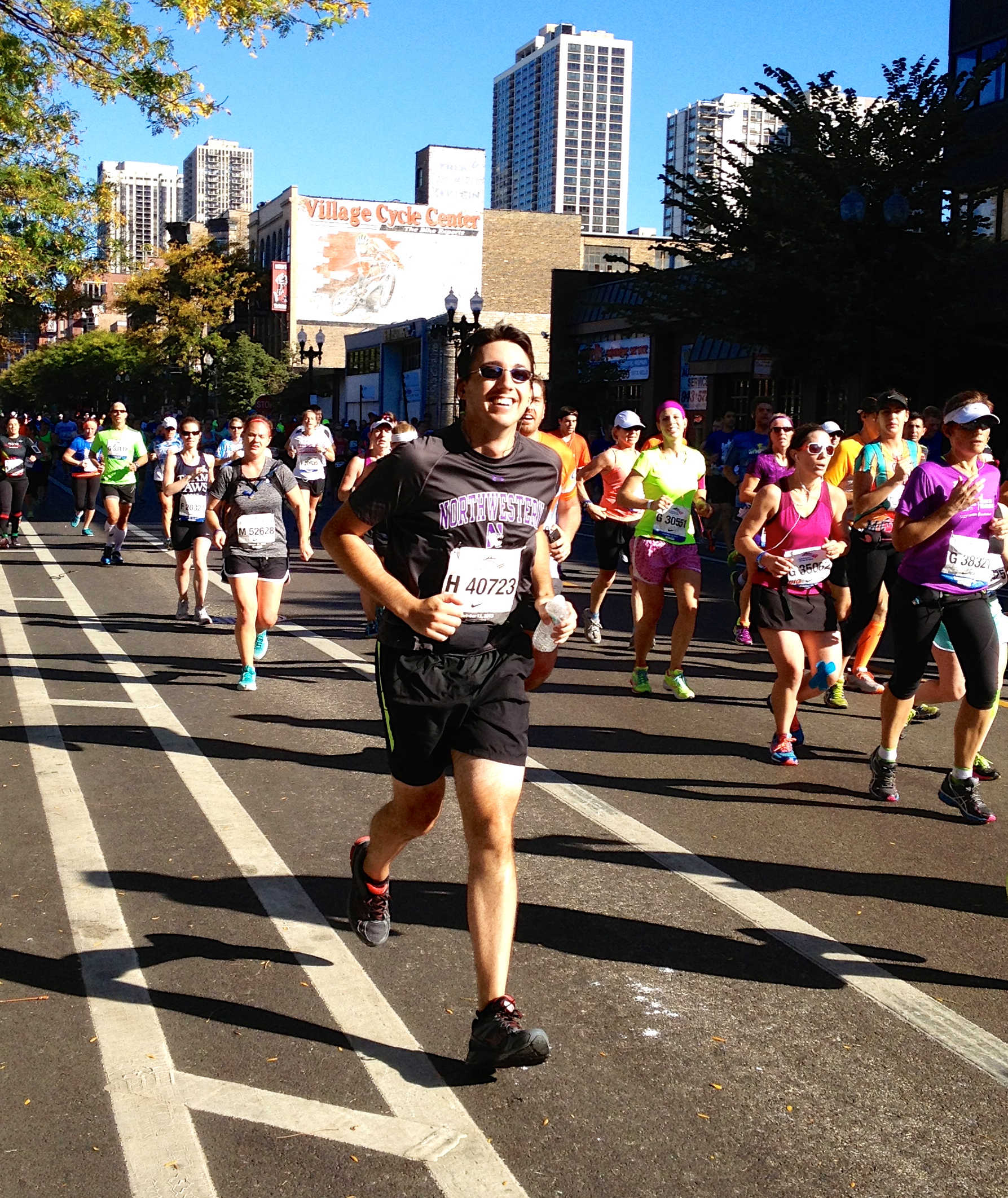
Bryan at Mile 11
The morning of the marathon, I could tell he was nervous. He said he just wanted to be able to finish the race. I had no doubts in my mind that he would not only finish, but fly through it. And he did, in 4 hours and 14 minutes. I saw him 4 different times throughout the race. Each time I saw him, he had a huge smile on his face, even at mile 25.
When I found him after he had crossed the finish line, he was so full of energy and I couldn’t understand how that was possible after what he had just went through. But then I realized that this was a goal that he had been working towards for months and months and he had just achieved it. Can you imagine what that feels like? I was so full of pride and admiration for him at that moment, but I was also thinking of what goals I could work towards and what challenges I could tackle in my life so that I could feel that way. He inspired me to do that.

Bryan and I after the finish line
As I think about Bryan’s journey and how he went from not exercising at all to running a marathon and being 100 pounds lighter, I realize that any goal is possible if you put your mind to it. Everyone is capable of overcoming some challenge or achieving something in his or her life. And oftentimes, while they are striving towards that goal, they are inspiring others along the way.


